


Migration Illustrated
PRESENTS
Migratory Arctic Tundra Caribou
Written by Warren T. Planker
Wildlife photography by wildlife, conservation, and photojournalism photographer Peter Mather of Whitehorse, Yukon
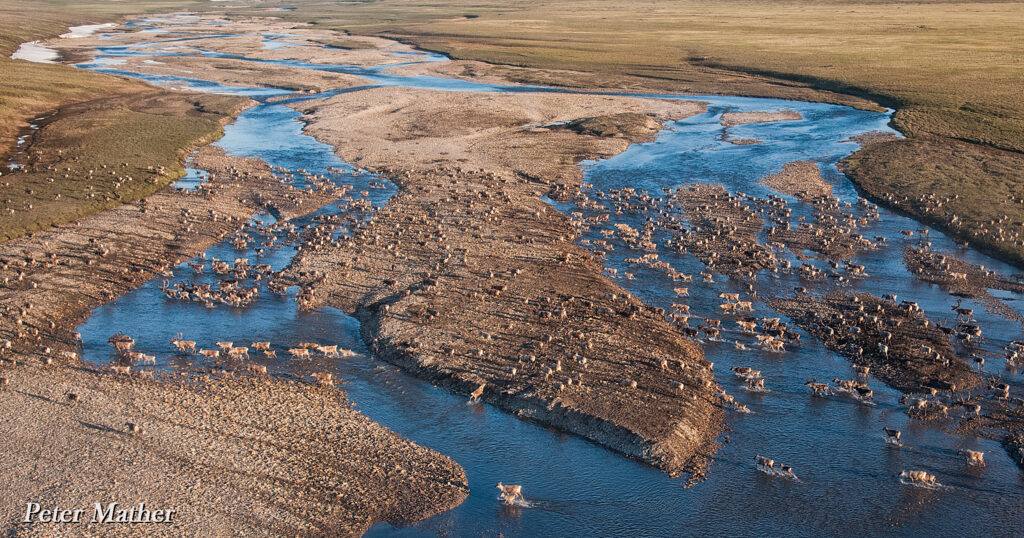
Rangifer tarandus is a large deer native to the Arctic and sub-Arctic regions of the world. These resilient migrators are known as caribou in North America and reindeer in Asia and Europe. Barren-ground caribou migrations are among the longest on land. Some herds travel up to two thousand miles per year from boreal forests and open ranges in winter to the Arctic Tundra in summer. They are the only deer species in which both males and females grow antlers.
Wildlife enthusiasts and photographers travel great distances to witness massive caribou migrations. Herds can be extremely large, with as many as a million individuals travelling together. Pregnant females lead the trek north in springtime in search of fresh grass and lichens to feed their calves. Come fall, herds move south with juveniles running alongside adults.
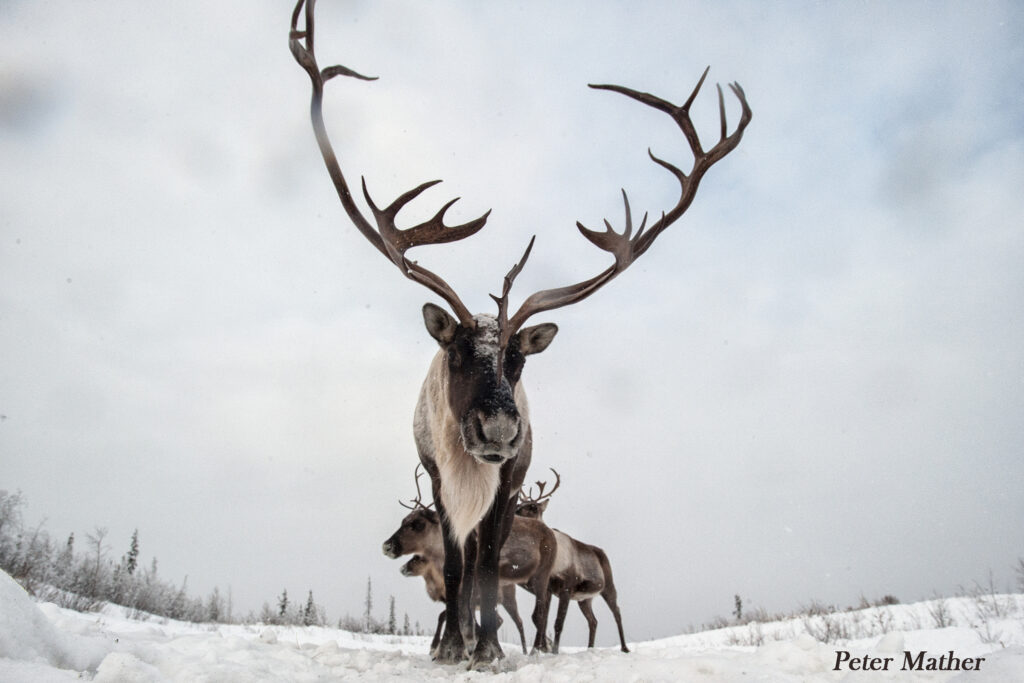
Caribou have several unique adaptations to help them survive a wide range of habitats on their long migratory treks. Within their nostrils are nasoturbinal bones that act as heat exchangers, absorbing humidity and warmth from blood vessel-rich tissue that lines spiral air passages, reducing heat and moisture loss from exhalations. Their eyes change from gold in summer to a deep blue to help them survive long, dark Arctic winters.
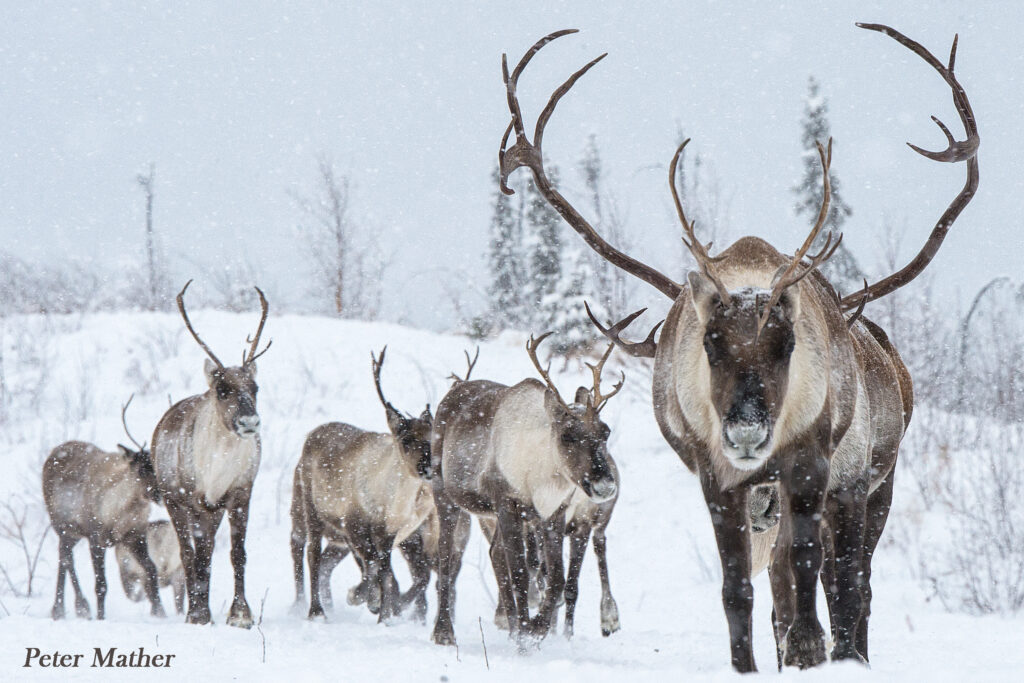
Oversized hooves distribute the caribou’s weight to keep them from sinking in deep snow, while acting as shovels for digging and paddles for swimming. Their hooves harden in winter for traversing snow and ice and soften in summer for traction on soft tundra. They have a dense undercoat beneath a layer of long, hollow exterior guard hairs that are insulating and buoyant.
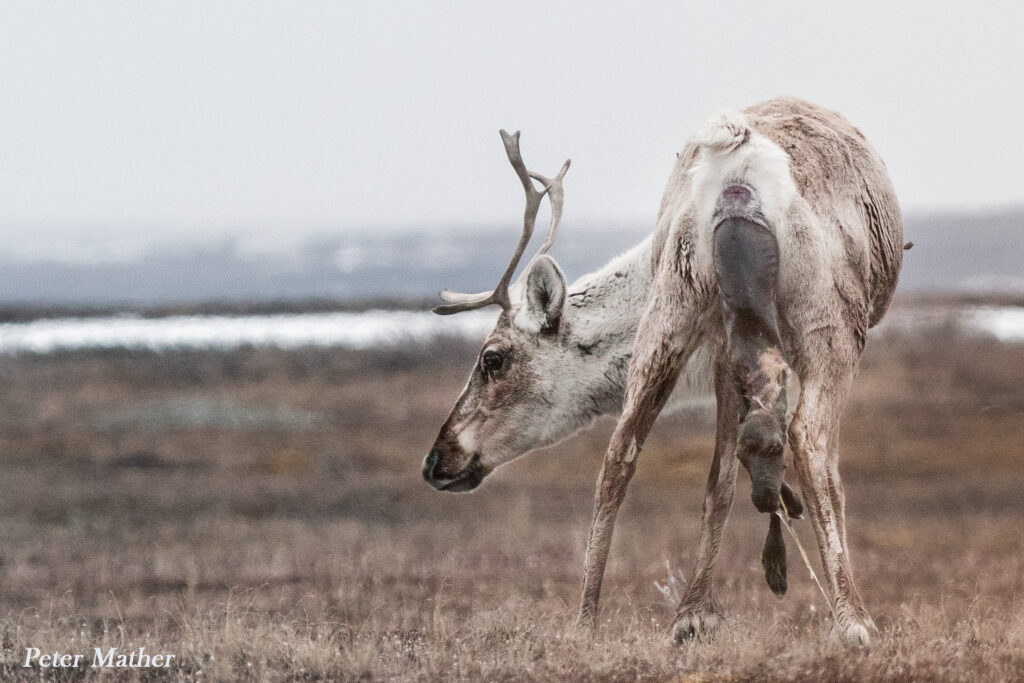
Temperature and snow levels play a crucial role in caribou migration. They travel to follow seasonal plant growth and protect their young. Migratory Arctic tundra caribou populations have dropped significantly over the past few decades. Herds have declined in regions that have experienced warming climate trends and increased human activity. Globally, caribou are listed as vulnerable, while many regional populations are classified as threatened or endangered.
THE LONG AND SHORT OF IT
Height: 2-1/2 to 5 Ft (76 to 152 cm) at shoulder
Weight: 240 to 700 pounds (109 to 317 kilograms)
Form: Sexual Dimorphism (body & antler size, shed)
Lifespan: 10 to 16 years in the wild (20 in captivity)
Breeding: Late September through October (Rut)
Offspring: 1 Calf / Pregnancy, 1 Pregnancy / Year
Status: Vulnerable globally (threatened/endangered regions)
Migratory Arctic Tundra Caribou
Photography by Peter Mather
A photographic journey along the migration routes of the world’s most fascinating species.
