


Migration Illustrated
PRESENTS
Gray Whale Migration
By Warren T Planker
Photographs by Christopher Swann
Gray whales (Eschrichtius robustus) rank among the largest animals in the world, growing as long as 50 feet (15.2 meters) and weighing up to 90,000 pounds (40,823 kilograms). They are known to be curious and friendly towards humans, however, they have earned the name devil-fish due to their fierce defense when hunted. One of the more interesting facts about Gray whales is their impressive migration; traveling nearly 12,000 miles (19,312 kilometers) on their annual journey from the Baja Peninsula off the coast of Mexico to northwestern Alaska and back again.
Gray whales are coastal mammals, inhabiting the shallow waters near the shore of their feeding grounds in the Arctic, down the west coast of North America, to their breeding grounds in the warm waters off the coast of Mexico. They are the only baleen whale species that primarily feed on the ocean floor.
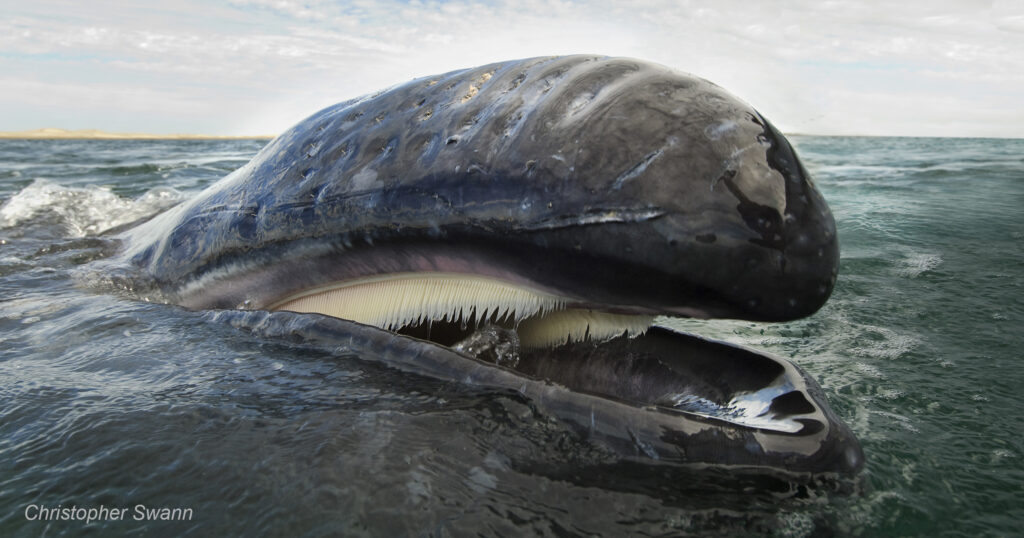
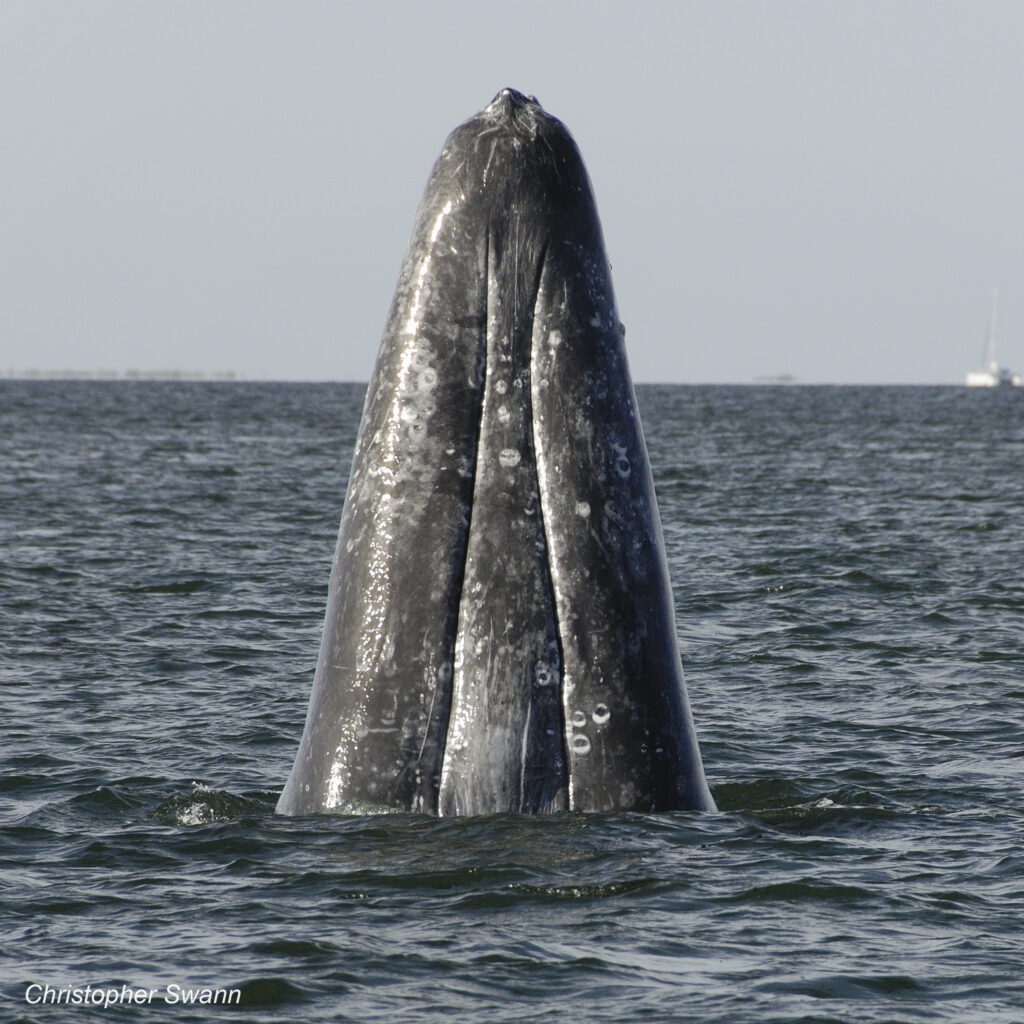
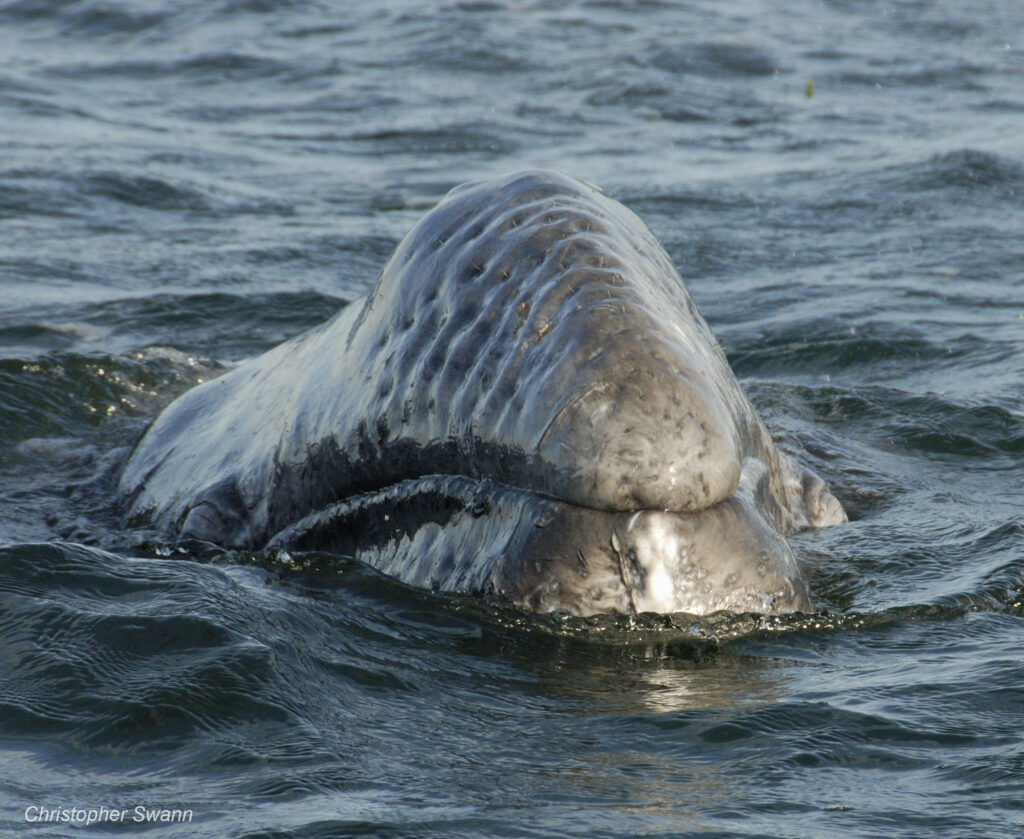
Gray whales have a dorsal hump with multiple nodules rather than a dorsal fin. They are dark gray with light patches and are infested with barnacles and sea lice. Grays don’t have teeth; instead, they have as many as 180 fringed baleen plates that enable them to separate crustaceans from the sea floor mud.
By the 20th century, commercial whaling brought gray whales to the edge of extinction. In 1947, the International Whaling Commission began protecting gray whales by enacting regulations, followed by other measures like the 1972 Marine Mammal Protection Act and the 1973 Endangered Species Act. In the 1980s, the International Whaling Commission implemented a commercial whaling moratorium to protect the gray whale population.
Incredibly, Gray whales have been able to recover to a status of least concern, although the species still faces threats from aboriginal whaling, entanglement in fishing nets, human activities in their breeding grounds, vessel collisions, and disruptive underwater noise.
THE LONG AND SHORT OF IT
Length: 50 feet (15.2 meters)
Weight: 90,000 pounds (40,823 kilograms)
Form: Reverse Sexual Dimorphism (slightly larger females)
Lifespan: 50 to 70 years (estimated)
Breeding: November to December
Offspring: 1 Calf per Pregnancy
Status: Least Concern
Gray whales have the longest migration of all mammals. They are fascinating animals that were once in danger of extinction. Today, we celebrate the Gray’s comeback as we remember the tragedy that could have been. Global conservation efforts continue, thanks to those who began fighting for these curious giants over a hundred years ago. Their efforts will not be forgotten.

A photographic journey along the migration routes of the world’s most fascinating species.
