

FEATURED SPECIES
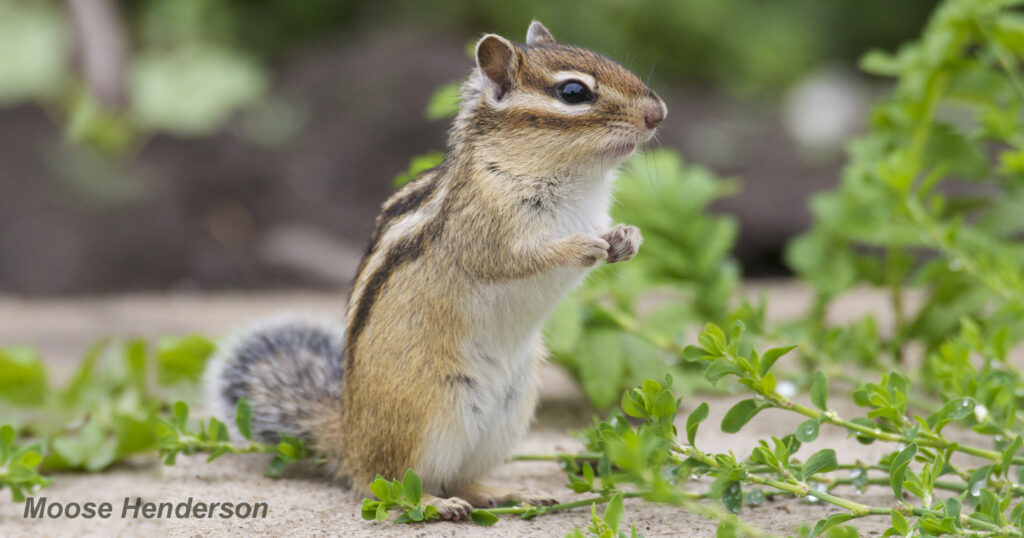
Siberian Chipmunks
Writing and Photography by Moose Henderson
Chipmunks are small omnivorous rodents that belong to the scientific family Sciuridae. They are only found in North America, except for the Siberian Chipmunk (Eutamias sibiricus). Siberian chipmunks are native to the area spanning from Central Asia to the Pacific coast, including Siberia, Far East Russia, Japan, Korea, and northern China.
The author spent two years (2007 and 2010) in Siberia and Far East Russia working as a freelance wildlife photographer. Living and working in a foreign country, when you do not speak the language, can be a bit lonely, especially in the barren, frozen wildness of Siberia. Most every day, from late April through September, chipmunks would be his companions.
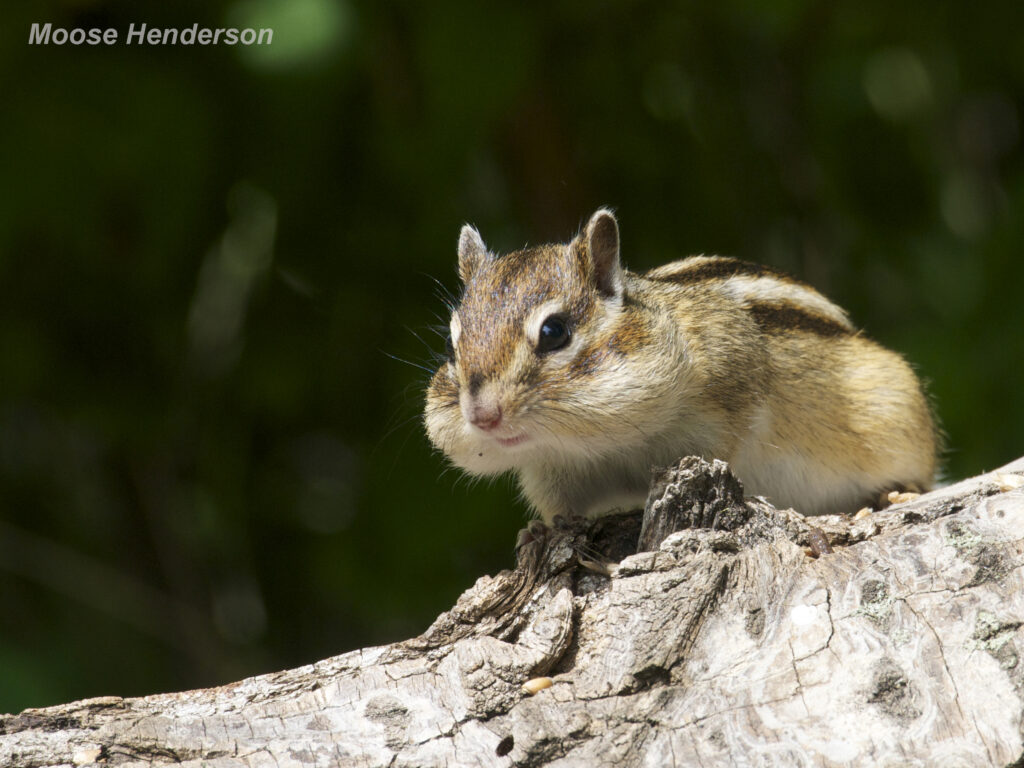
Siberian chipmunks are found in coniferous forests (taiga, also known as boreal forest in North America). They are tolerant of humans, so they are also found around farms, villages, and parks. They are seven to ten inches in length, one-third of which is a tail, weigh approximately two to five ounces, and they have nine stripes (five white and four dark) that extend from nose to base of tail. Both males and females are similar in size. They can survive temperatures of -80 to +85 degrees Fahrenheit.
Chipmunks overwinter in burrows in extremely cold regions, but they do not hibernate. Stored within these burrows are a cache of food, a burrow path for defecation, and a living area. Breeding occurs in April, and a litter of three to eight kits is born after a four to five-week gestation. Females provide care while males continue their mostly solitary lives.
The author was first introduced to chipmunks in the 1960’s through the popular television show featuring Alvin, Simon and Theodore, The Alvin Show. Alvin was the mischievous one, Simon tall and lanky, and Theodore a bit chubby. Although an animated production, it was instrumental in introducing young children to the love of animals.
Siberian Chipmunks
Photos and Text by Moose Henderson
– – –
FEATURED SPECIES
The pandemonic nature of evolution yields many fascinating species
