
Goblin Valley State Park, Utah, by Emily J. Carter

PRESENTS
In Search of the Heavens
Author and Photographer:
Emily J. Carter
It was the middle of the night and the sky was pitch black. There was nothing to guide my way except the brilliant stars in the sky. The air was silent; only the sound of the wind blowing through the brush of the desert landscape could be heard. Wandering alone in the darkest of night, I was called by the Milky Way in all its majesty.
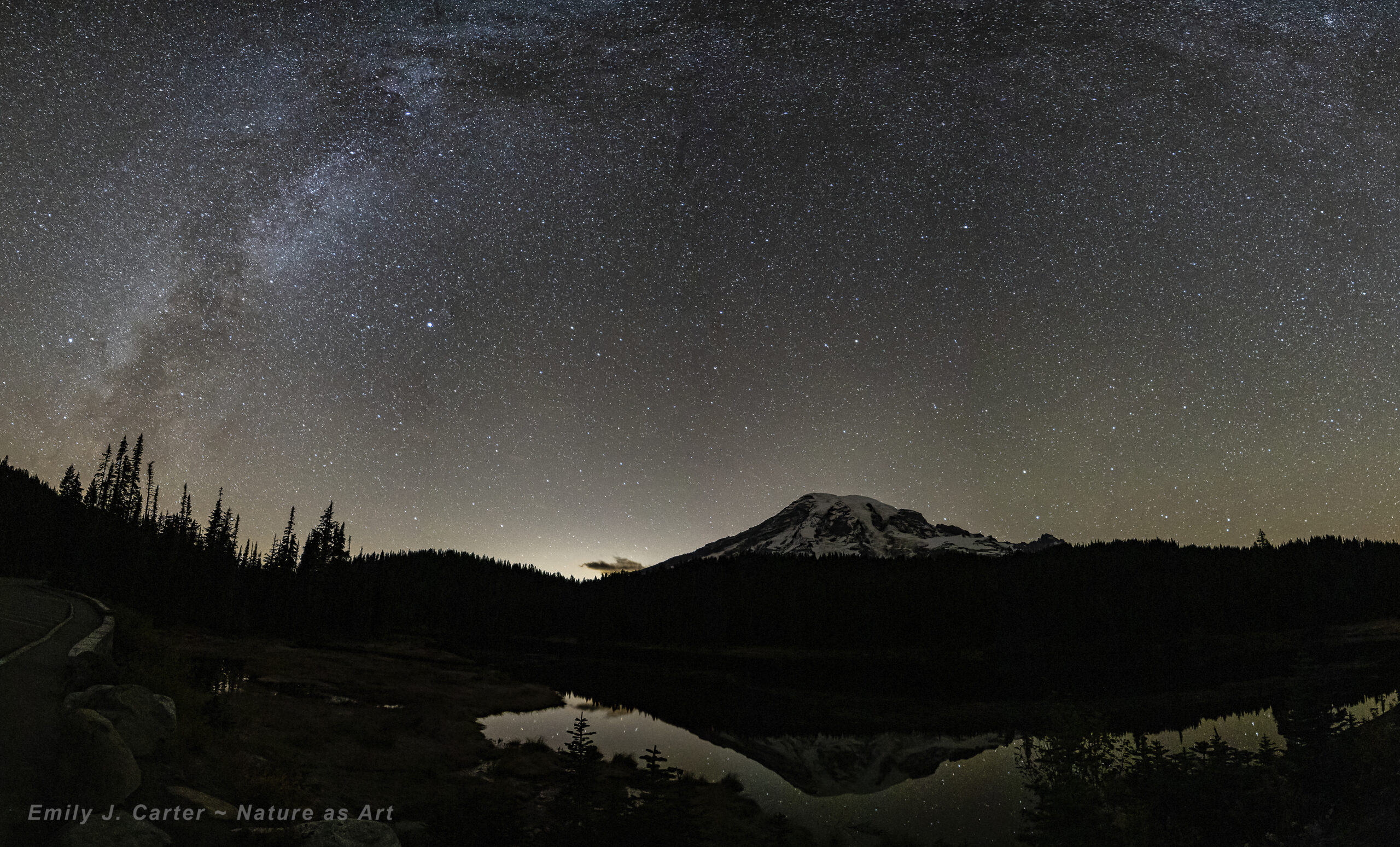
Mount Rainier National Park, Washington, by Emily J. Carter
Finding a truly dark sky is a challenge in these modern times. Light pollution ruins our ability to see the universe, confuses wildlife in their migratory patterns, and is a visible waste of energy.
I’ve visited several dark sky areas in search of the Milky Way. While these ideal spots are quite challenging to locate in the Eastern US, they can be found in places like Assateague National Seashore and Blackwater National Wildlife Refuge in Maryland. These dark sky areas can also be found in remote areas of Pennsylvania.
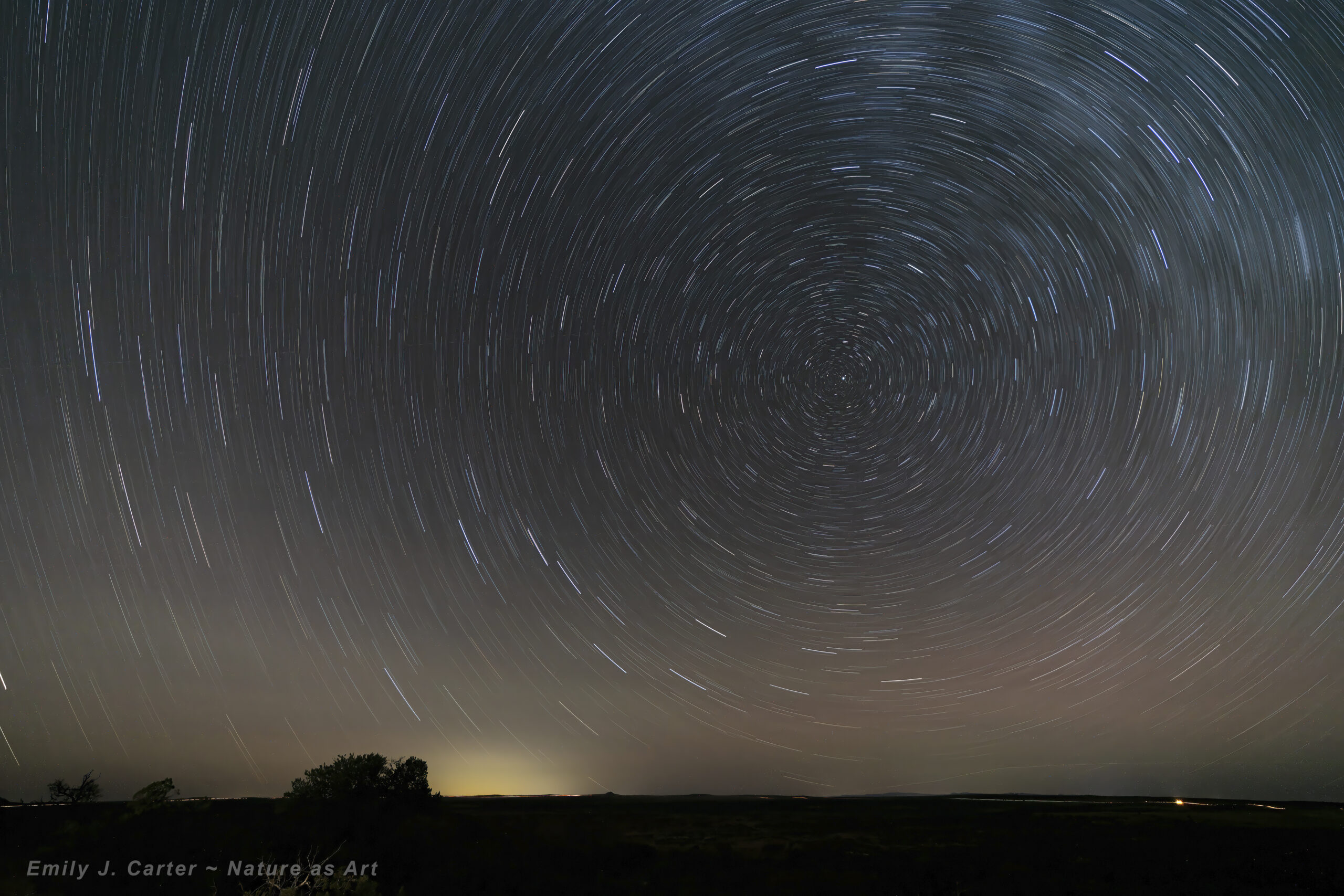
Star Trails, Moab, Utah, by Emily J. Carter
Western states offer many incredible dark sky areas. Through Dark Sky International (https://darksky.org) and their International Dark Sky Places (IDSP) program, they certify areas around the world where night sky visibility is preserved through responsible lighting and public education programs.
Near Moab, Utah, there are several certified Dark Sky Places such as Arches National Park, Dead Horse State Park, and Goblin Valley State Park, to mention a few.
With the threat of growing light pollution, Dark Sky International along with the International Union for Conservation of Nature (IUCN), have stated that, “in order to safeguard the right of any citizen to enjoy the vision of the starred sky, we recommend that national and local governments establish a suitable number of ‘Dark Sky Oases’ and protect them from excessive artificial light at night.”
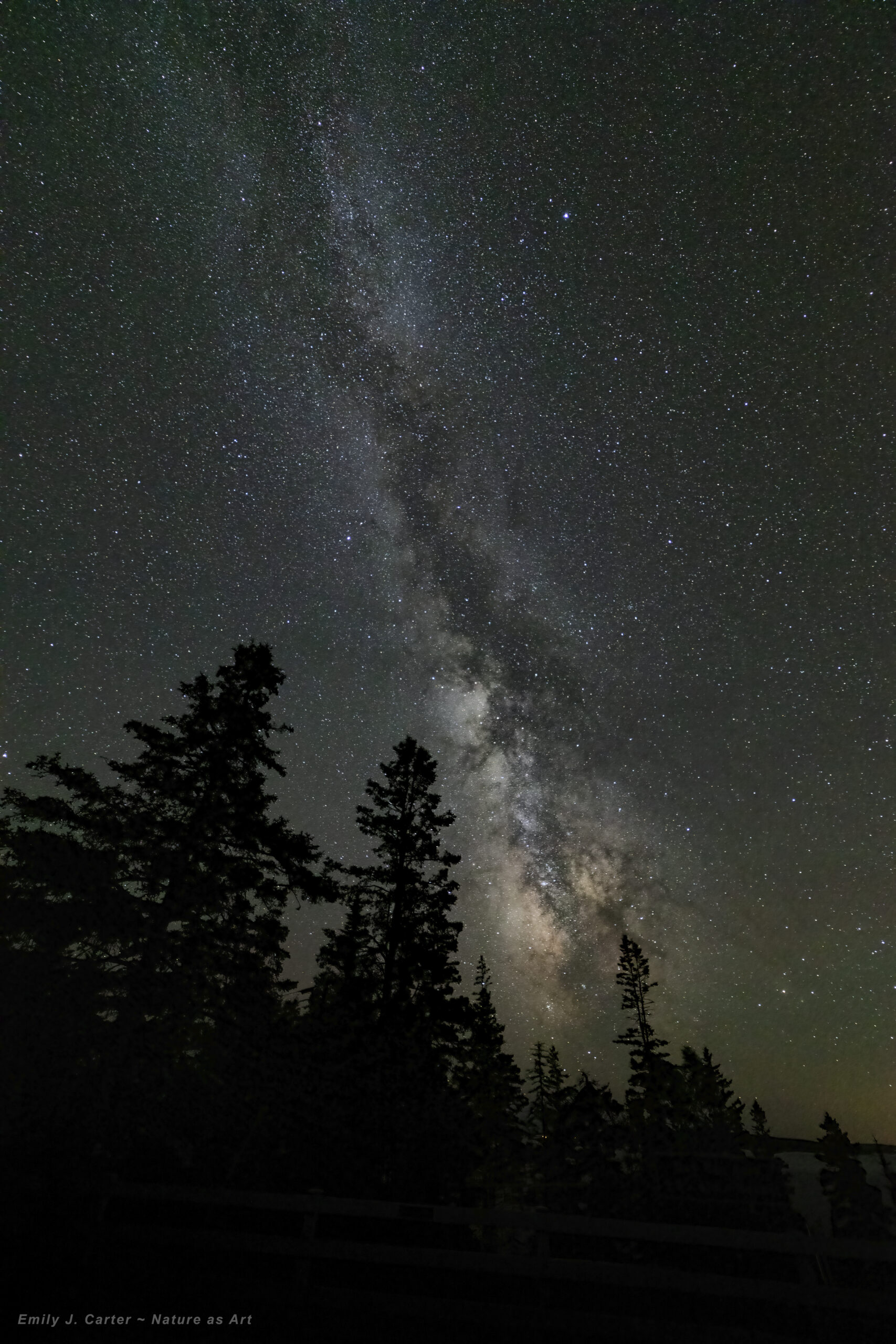
Mt Desert Island, Maine, by Emily J. Carter
So how can you find a Dark Sky Area?
Dark Sky International offers an interactive map where you can search locations worldwide. https://darksky.org/what-we-do/international-dark-sky-places/all-places/. For Smart Devices you can download the Light Pollution Map – Dark Sky app (iOS or Google Play.)
What can we do to reduce our light pollution?
Review your outdoor lighting and see if you can reduce, replace, or turn off any landscape lighting you might have.
- Turn off unnecessary lights: Turn lights off when not in use, both indoors and outdoors.
- Use shielded fixtures: Use lighting that faces downward.
- Install motion sensors: Install outdoor lighting motion sensors to activate only when needed.
- Choose warm-toned light bulbs: Use yellow or orange-toned light bulbs, which emit less blue light that can interfere with nocturnal wildlife.
- Plant trees or shrubs: Strategically plant trees or shrubs around outdoor lighting to create natural shields.
While you may lose sleep in search of visiting the heavens from earth, it’s well worth it. The majesty of the stars and constellations in the skies are breathtaking and are cause for contemplation.
Emily J. Carter ~ Nature as Art
Author and Photographer
– – –
Insight and spirit with scenery and narrative from the photographer behind the breathtaking images.
