


PRESENTS
The Sky is Filled in White
Writing and Photography by Emily Carter
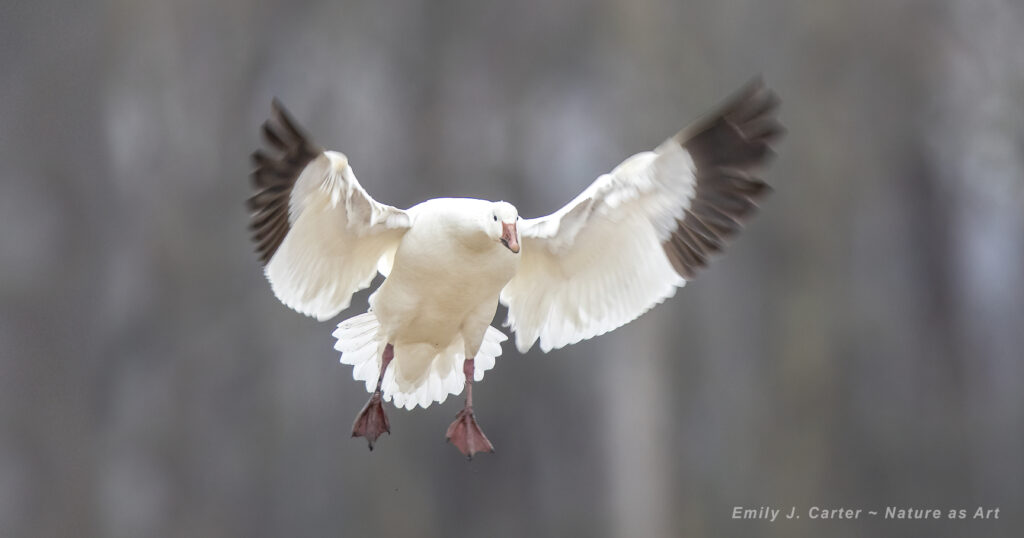
The hush of the fallen snow mutes the landscape as I walk quietly towards the water’s edge. The closer I get to the lake the clearer I hear the distant sounds of countless Snow geese breaking the peaceful early dawn.
Migration is one of the most fascinating phenomena in the natural world. Fortunately, I live in the Atlantic Flyway, and one of the most impressive migrations I’ve witnessed is over 100,000 Snow geese at Middle Creek National Wildlife Management Area (WMA) in Pennsylvania.
Surrounded by countless farms, the WMA is a preferred stopping point for Snow geese when spring is around the corner. In the daytime they head out to the barren cornfields to forage and at night they roost on the lake. Traveling in a massive flock, the energy and power is breathtaking. As if one, the flock has a habit of flushing in the form of a wave.
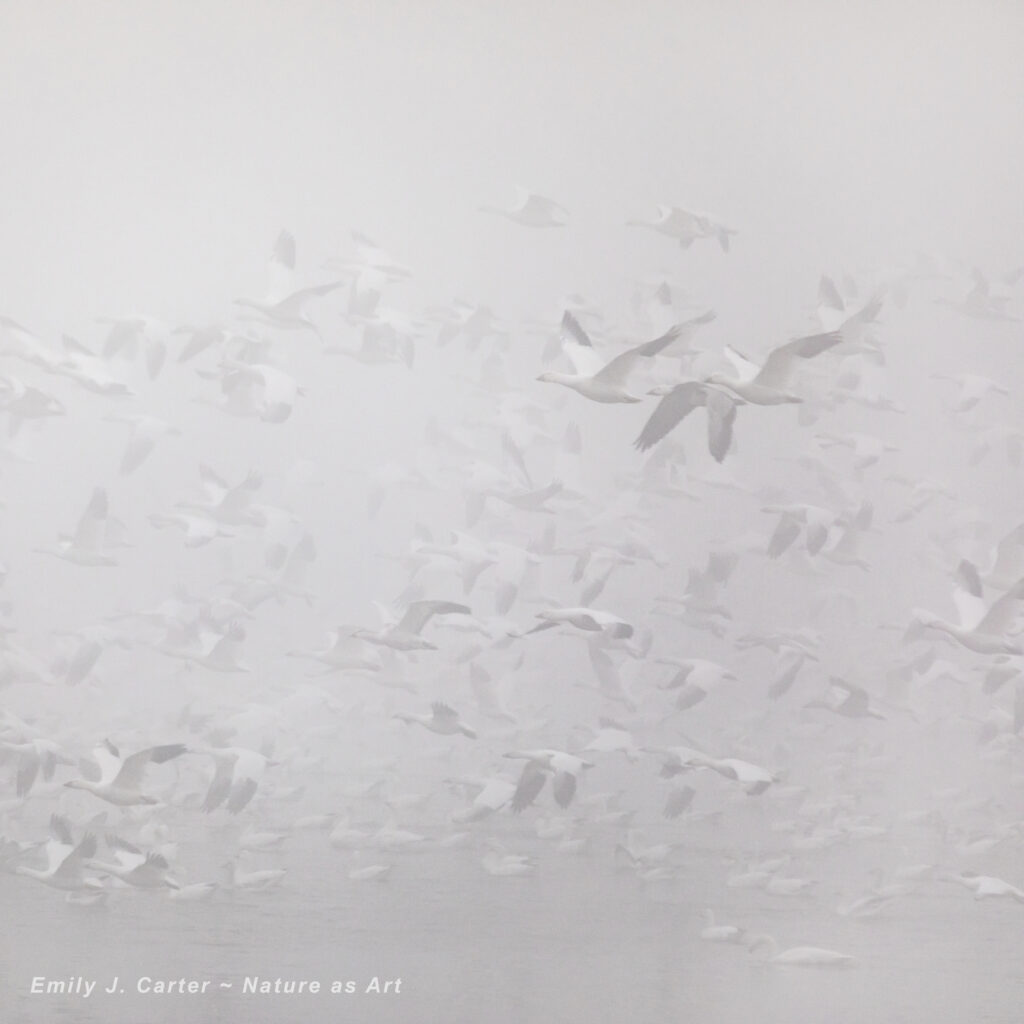
What is flushing, you might ask? Well, if you can imagine, the noise of honking geese becomes louder and louder while the flock’s back row begins to rise up to the sky. Their wings flapping, their feet pounding the water; the sound is almost deafening. The wave gets higher and higher as the birds begin to soar. With over 100,000 geese, they fill the sky and begin circling overhead, still honking and appearing to dance in the sky together.
It’s a breathtaking and spiritual experience for those who first witness the event. What’s even better, they settle back down on the lake, only to do it again after resting.
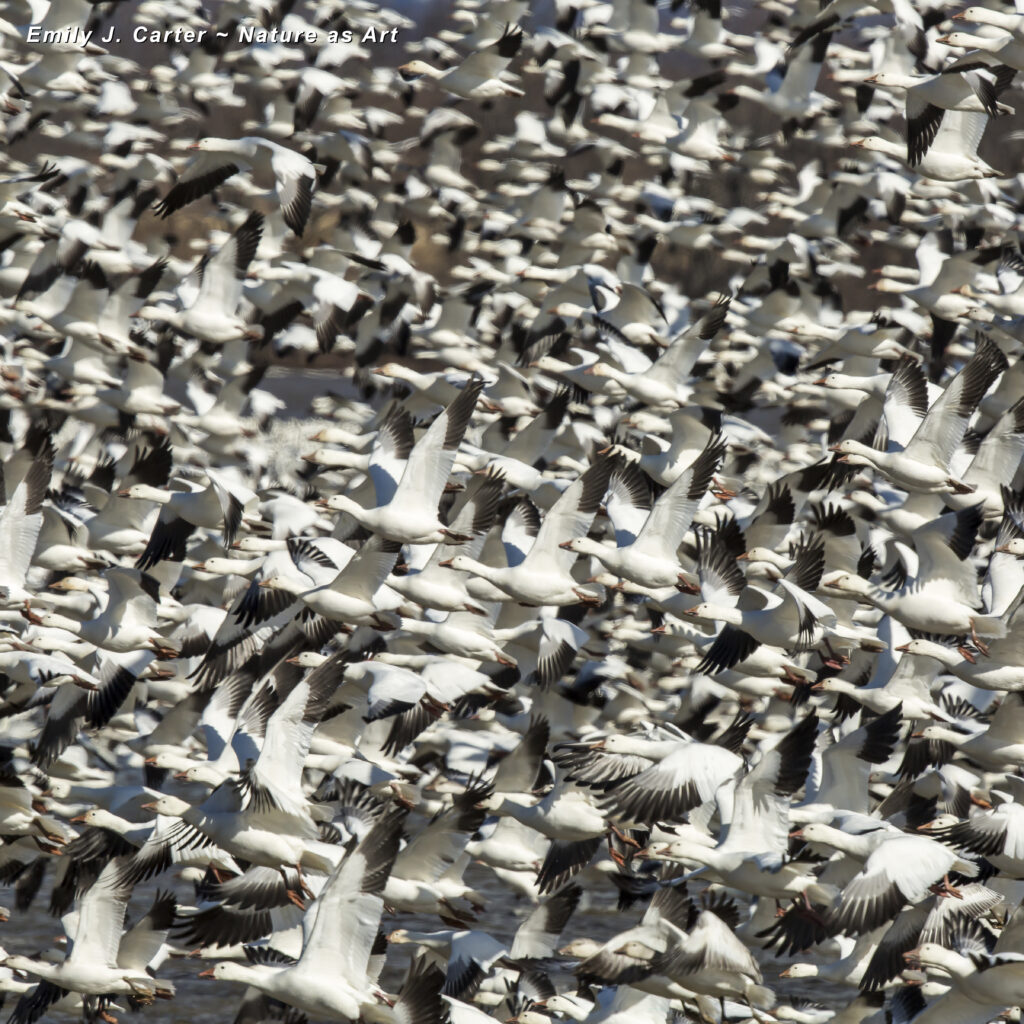
Snow geese are one of the few bird species that I know whose populations are actually increasing. They are now overpopulating the breeding grounds in the Arctic and Subarctic of North America, so much so that there are no hunting limits on Snow geese within the United States.
Wintertime is when Snow geese migrate southwards to various areas in the United States. Along the Atlantic Flyway they can be found as far south as Pocosin National Wildlife Refuge in North Carolina. In the Central Flyway they can be found in Bosque del Apache National Wildlife Refuge in New Mexico.
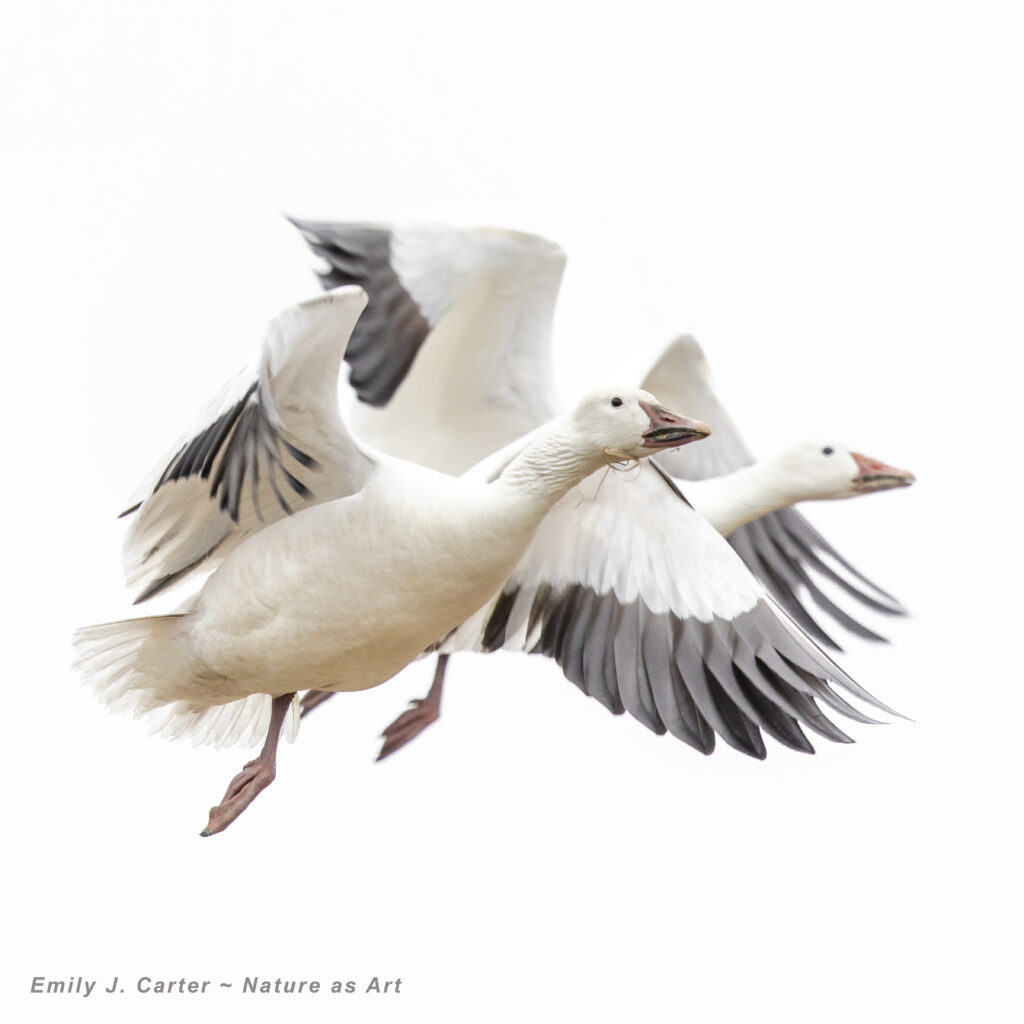
Similar to our time zones, avian migratory highways have been divided into four zones: Atlantic, Mississippi, Central, and Pacific Flyways. These critical highways are managed by the U.S. Fish and Wildlife Service along with other state agencies.
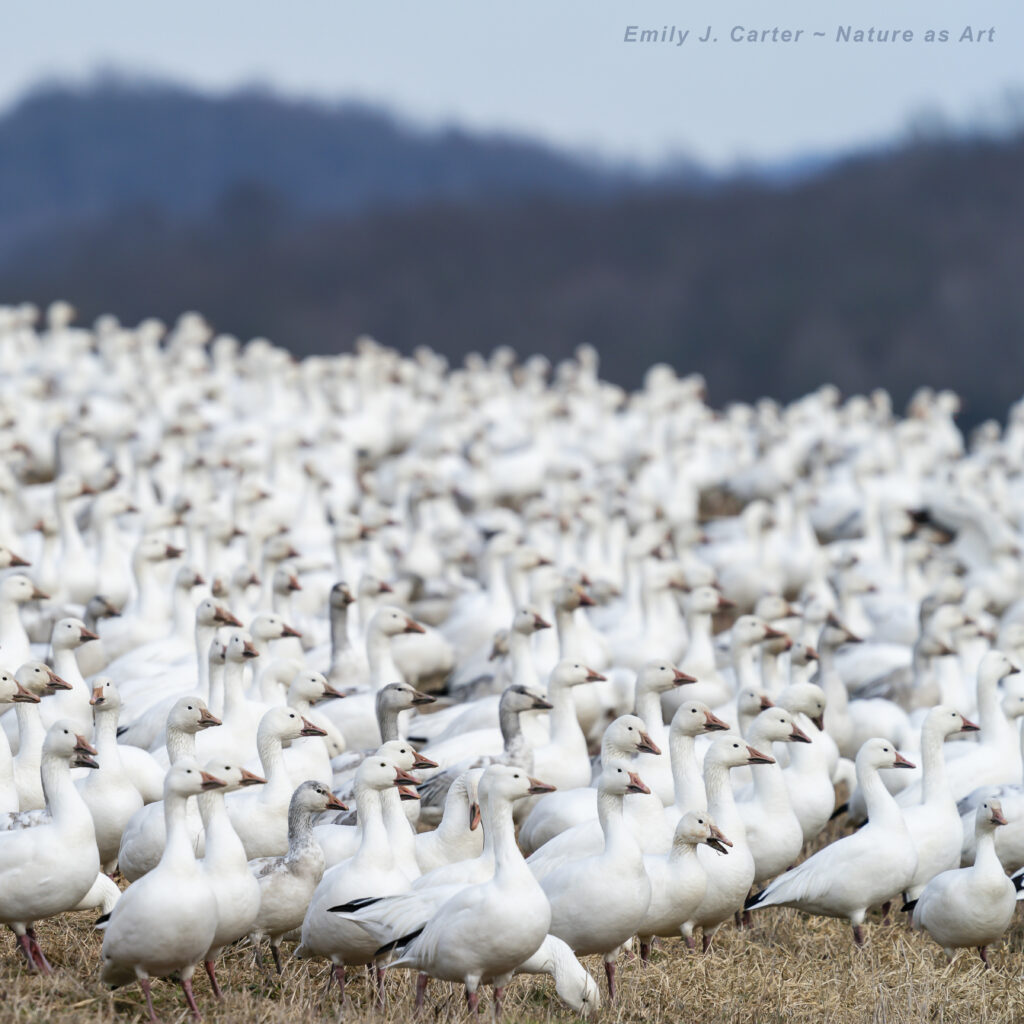
However, there are challenges facing these traveling birds. As they tend to travel at night, city lights can confuse them greatly, causing them to become disoriented or even strike the windows of tall buildings. The next challenge is the increase in development and loss of natural habitat, along with their resources. These birds travel great distances and having a place to rest while enroute is critical to survival. Finally, climate change is also affecting migratory patterns and timing.
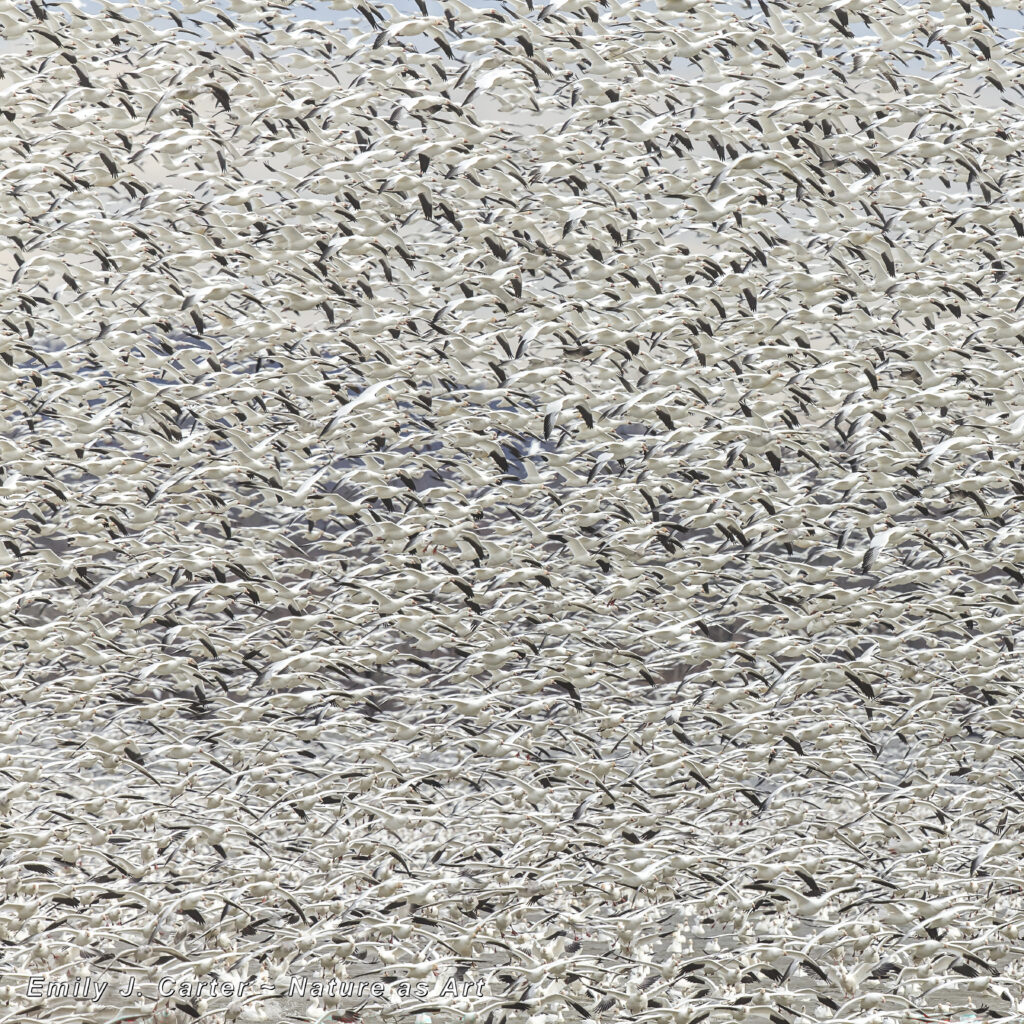
We are fortunate to have designated areas like Wildlife Management Areas and National Wildlife Refuges, which have set aside expansive tracts of land for conservation and to enable future generations the opportunity to experience the natural world as we can.
Hopefully, one day you will have the incredible experience of being among a huge flock of migrating Snow Geese. It is one of those moments that will always stay with you, bringing you hope, joy, and amazement at the wonders of nature.
Writing and Photography by Emily Carter
– – –

Insight and spirit with scenery and narrative from the photographer behind the breathtaking images.
